

Summer's End
Thoughts about a bear, a trail, and coming back to center

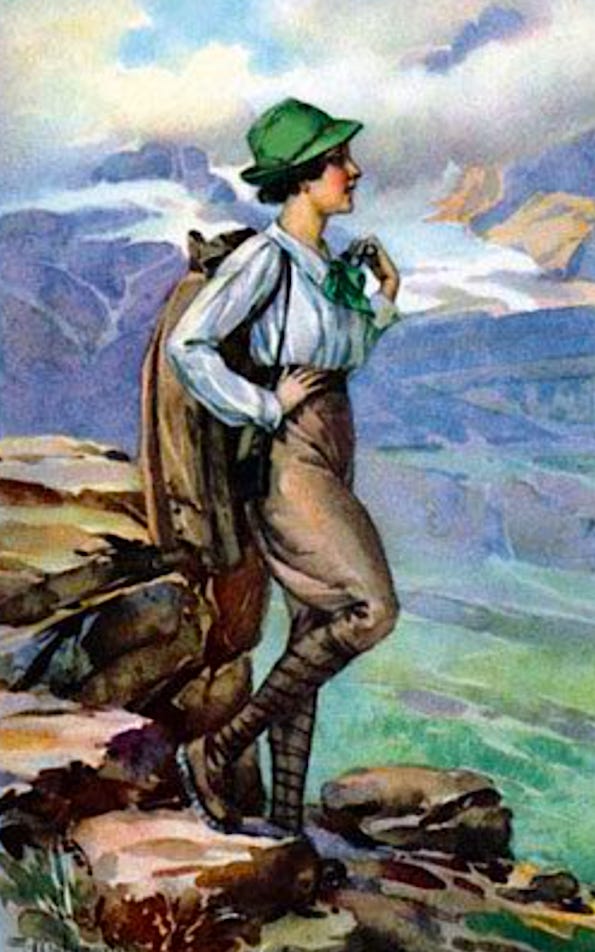
Heavy August air gave way to coolness, and late afternoon light seeped through an evergreen canopy. I was reviewing the day’s work and simultaneously listening to the diminishing sound of horse hooves pulling the last wagon of the day. I smelled of sweat. Indeed, I was always covered in dust and tasted like lake water, not that anyone was licking me these days, I noted to myself.
I let my thoughts unravel along the rutted path. How did I get here? “Here” didn’t necessarily mean Upstate New York, but here in my life. The Adirondack Forest Preserve is a long way from San Francisco. Turning these thoughts over and over in my mind, I rounded a bend in the path where the fern-dense forest floor gives way to lighter underbrush and volunteer saplings. In a split second, all my street smarts returned as my caution radar shot up. It was not fear, not yet, but I knew I was not alone. I was trespassing. I couldn’t see a figure, but my mother’s voice came from the back of my head, “If you ever see a bear, get big.”

The above piece was written for a travel writer’s workshop a few years ago (no, I never sent it out). It’s now the summer’s end — about the same time of year when this event happened, and I’m tossed back to both the moment I encountered a mother bear and her two cubs, and a deep-to-the-bones awareness that I had to be in that forest at that point in my life. By all accounts, I’m an urban person: I’ve lived in a major US city since I was 20, and most of my vacation destinations are cities with a plethora of cultural institutions and historic sites. I love being in a city and exploring the historic streets and enjoying all the conveniences that cities offer. Yet, at the end of a heartbreaking divorce and a relocation from the west to the east coast, I needed something wild and grounding.
None of this is surprising. Endless books and movies have been written on the topic (has every woman read Wild?), and there have been major studies on the topic, but these are not what drove me. The months before getting a summer job as an architectural historian for a historic Adirondack Great Camp, I was pacing the floor of a rental cottage in a Rhode Island coastal town (an idyllic location in and of itself). I needed space. Big, damp-earth-smelling space, with raw textures, icy waters, and unidentifiable, uncultivated sounds. Where I ran to was not a forest wilderness but a larger and far less tamed version of the woods adjacent to my own childhood backyard.
I’m aware that this may seem contradictory to my everyday, middle-aged, urban life, and the fact that 1) I’m highly allergic to green, growing things, in addition to the ubiquitous poison ivy, and 2) I hate camping. It was not an accident that I chose a situation where, at the end of the daily 11 mile roundtrip hike in summer heat, I could take a lukewarm shower, cook on a 1960s electric stove with questionable wiring, get into a bed with a mattress I didn’t have to inflate, snuggle with a rescue cat who chased the mice away, and sleep soundly in a rambling, historic gatehouse I shared with housemates half my age. We had wifi and ice cream. It was great.
The job itself was an easy lift and satisfying, but the journey to and from the job site was the real benefit. Over 2 ½ months, I followed the forest’s seasonal process as fiddleheads unfurled into broad, feathery fronds, the beavers’ complex of dams built and rebuilt after major storms, and watched birds, chipmunks, minks, hares, and, of course, the bears, grow from babyhood to adolescence. In essence, I watched life. I was an observer of things I had no control over — an interloper who was allowed to audit but not interrupt cycles or processes. I did not rescue the fledgling or turn away from the owl’s exacting hunt. It was both beautiful and brutal, but it was not mine.
To that point in time, my own beautiful and brutal life had been left on a wide, looping trail from a leafy childhood sanctuary of make-believe, to the tear-washed tiles of a suburban pantry floor, to a city of piercing light and piercing arrows, and back again. Like the cycles I watched in the forest, my life was circling back. It was an opportunity to step outside my own story and witness something larger, older, and completely indifferent to my personal dramas. The forest didn’t care about my divorce or my relocation; its ancient rhythms were going to continue with or without me, and that was both humbling and restorative. I hadn’t gone to the Adirondacks to get lost or found, I had gone to get grounded. In the Saratoga train station, I removed my hiking boots. They were dirt-packed and heavy, and I left them next to the trash can. I needed to travel lighter, to be lighter.
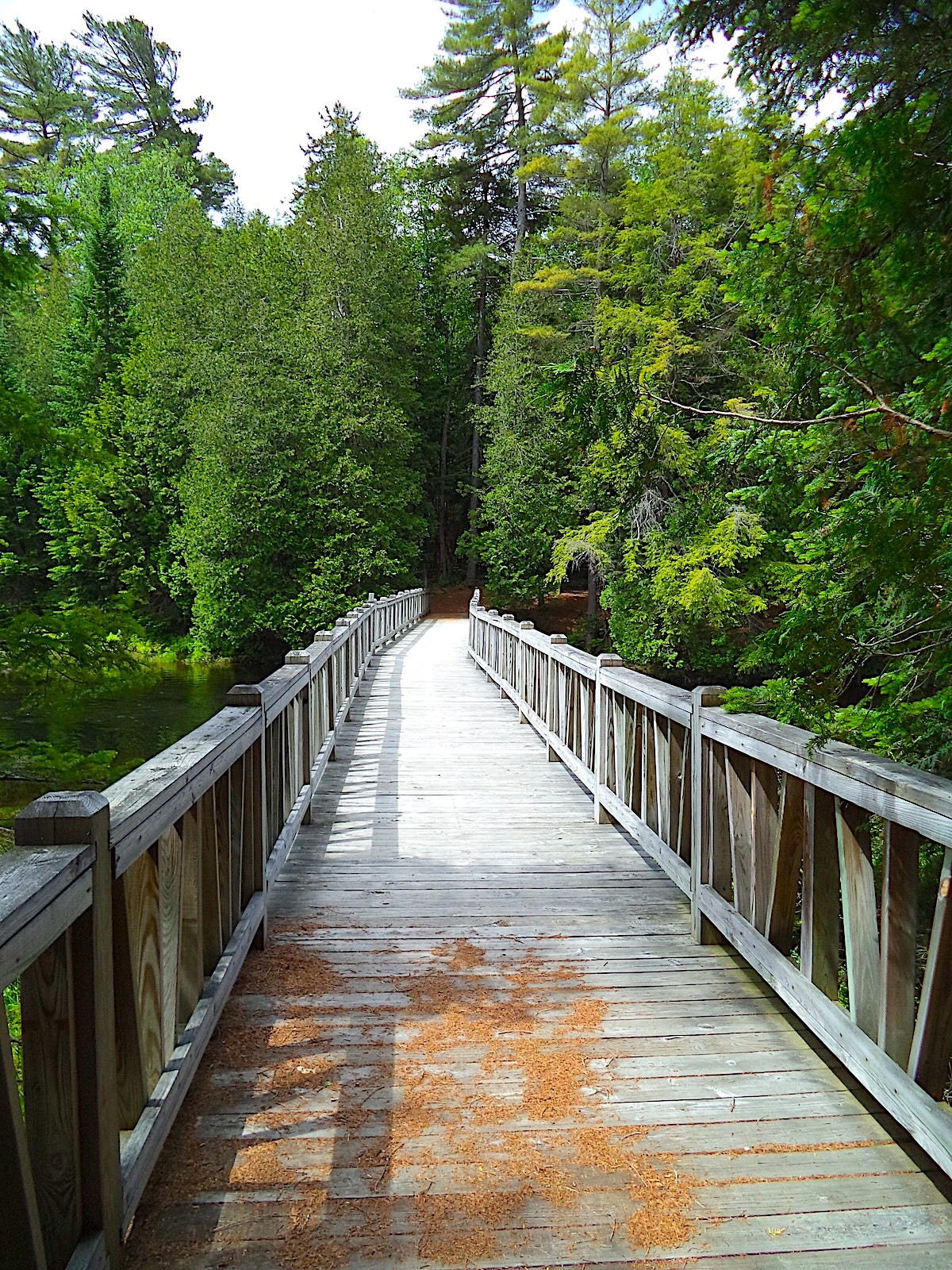
Have a hankerin’ for hiking the Adirondacks?
My short-list recommendations for your autumn explorations and accommodations
Great Camp Santanoni, Newcomb, NY
Camp Sagamore, Raquette Lake, NY
The Point, Saranac Lake, NY
The Hedges, Blue Mountain Lake, NY
Slateville Fire Lookout Tower, North Hebron, NY
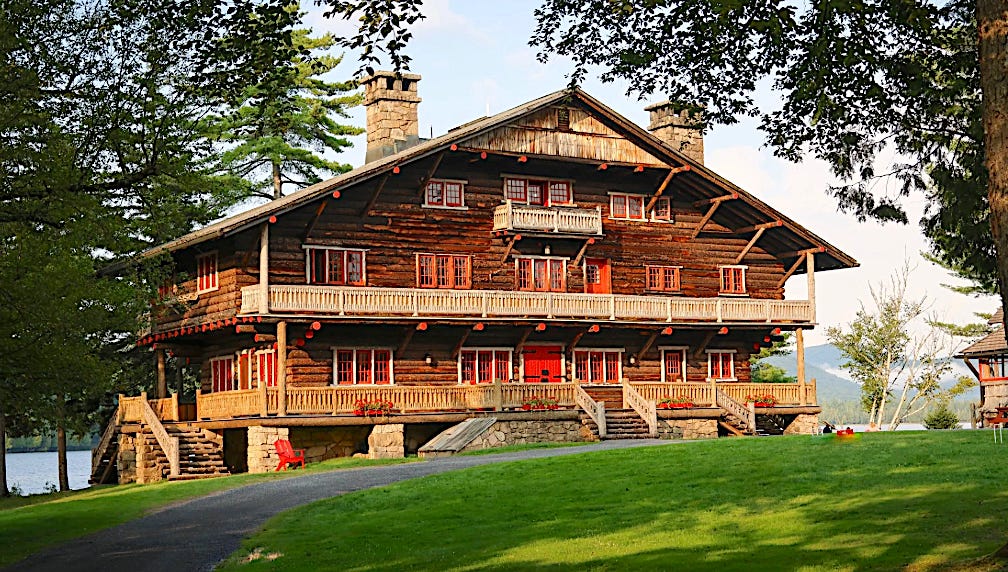
If enjoying the Adirondacks from the comfort of your home is more your style
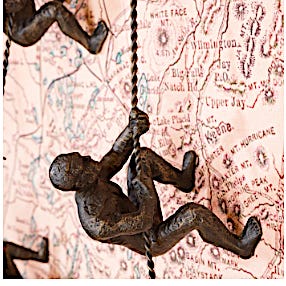
Dartbrook Rustic Goods (This sculpture has been hanging on my wall for years)
Nerd Alert:
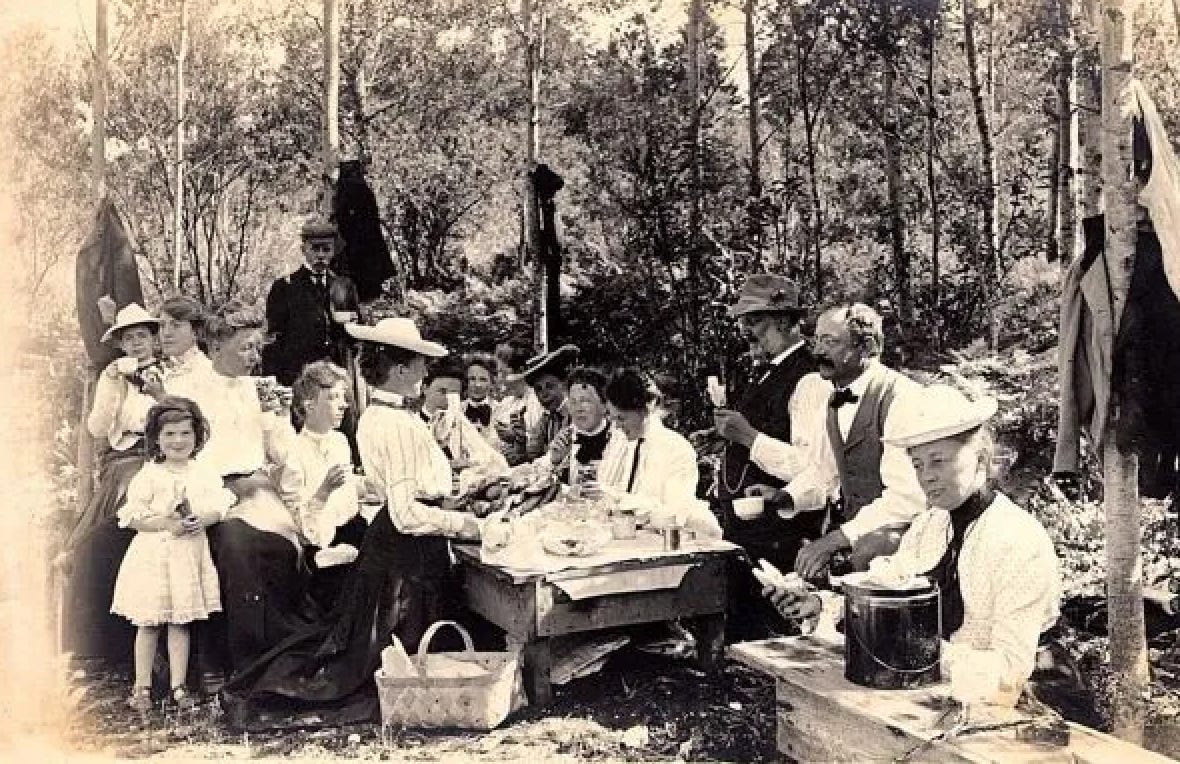
Gilded Age denizens were inspired by the art of the Hudson River School of Painting (1825-1876), which included artists Thomas Cole, Asher Durand, Frederic Church, and Jasper Cropsey, and writings of the period that promoted the Adirondack wilderness as a place for exploration and enjoyment. On the heels of this movement was Adirondack real estate developer and visionary, William West Durant. William Durant designed rustic complexes, using native materials like logs and stone, and sited them near mountain lakes with magnificent views. Pine Knot, built on Raquette Lake, completed in 1877, was the first of Durant’s developments. Durant had been somewhat of a troublemaker, and when his father, Dr. Thomas Durant, lost investments in the Panic of 1873, he was left with hundreds of thousands of wild Adirondack acres. He put young Durant in charge of developing tourism in the region, presumably to increase property values (and keep his son out of mischief). William Durant took inspiration from European mountain styles and adapted them to appeal to wealthy urbanites looking to commune with nature, but with all the comforts of city life. This included having fine china for picnics and servants to carry the heavy hampers over the rough terrain.
Be sure to look for the next issue of Sunday Pants, where I may finally talk about idioms and architecture! Or maybe I’ll get distracted with another topic

Stay curious
— Sheila
Thanks for reading Sunday Pants! Subscribe for free to receive new posts and support my work.